Gurukshetra Stories and Incidents

M/s Gurukshetra Consultancy has focus on strategic communication (Advocacy), Promotors, senior Leadership and CXOs image & positioning, aligning Corporate Social Projects with corporate objectives and streamlining internal communication of corporate structure. M/s Gurukshetra Consultancy is all about defining unlimited contribution and scope of Gurus of Corporate World towards positioning industry, society at large and the country, their Kshetra. Gurukshetra would also feature success stories of CXOs and professionals - people who matter and are Gurus of their own Kshetra.
Showing posts with label Vedanta. Show all posts

VEDANTA KHUSHI - HINDUSTAN ZINC CELEBRATES WORLD ENVIRONMENT DAY


Employees and their Families participated and Nandghar children became guardian of the planet Earth... 

Hindustan Zinc celebrated “World Environment Day” on 4th & 5th June, 2017 at Head Office and at all its business locations. Hindustan Zinc believes World Environment Day is the opportunity for everyone to realize the responsibility to care of the Earth and to become agents of change.

During the occasion, Plantation drive was carried out at Zinc Park on 4th June, 2017 where Mr. Sunil Duggal – CEO, HZL, the Chief Guest of the program said ‘I feel more confident than ever that the power to save the planet rests with the individual consumer. Reserve and preserve it for the future of your children.

Various activities like exhibition, painting competition, inauguration of vermi compost set-up were planned to involve employees, their families and children. Painting competition was organized for children of employees on‘Connecting People to Nature’, the theme for World Environment Day 2017, to encourage people to get outdoors and into nature, to appreciate the beauty of planet, and to take forward the call to protect the Earth for prosperity.

Mr. V Jayaraman – Head EOHS, Mr. Ramakrishnan Kasinath – Head Commercial, Ms. Sonal Shrivastava – Dy. CFO, Ms. Neelima Khetan – Head CSR, Mr. Akhilesh Shukla  - Unit Head R&D - CRDL and other HZL employees along with their families also participated to make the planet greener’.

On 5th June, 2017, Mr. Sunil Duggal, CEO celebrated World Environment Day with children of Padakhadri Nandghar in Udaipur along with his wife Mrs. Ramdeep Duggal.

Mr. Duggal planted a Guava Tree at Nandghar with little Runika and  Mrs. Duggal planted a Mango tree with naughty Jitu. Hindustan Zinc also pledged to plant one fruit tree at every Nandghar. Apart from fruit trees, a seasonal vegetable garden was also set up at the Padakhadri Nandghar.

On this occasion, Mr. Duggal said – ‘let the children become the guardians of this planet, and let Nandghar teach them about caring and nurturing the environment’. During their visit to Nandghar, he interacted with children, participated enthusiastically in their poem recitation and other activites.

Mrs. Duggal also interacted with the parents of Nandghar children to understand the growth and change they see in their children.

Mr. Pavan Kaushik – Head Corporate Communication said “Hindustan Zinc has implemented extensive green belt development projects and has around 1.4 million of green cover around its operations.”

Also present were Mr. Manoj Nashine - Unit Head, Zinc Smelter Debari, Ms. Neelima Khetan - Head CSR, Ms. Priyanka Singh - CEO Seva Mandir and other representatives of HZL & Seva Mandir.


VEDANTA KHUSHI - KHUSHI TEAM ORGANIZED A WORKSHOP WITH 150 SLUM CHILDREN

Vedanta Khushi  believes in making combine efforts to bring the change.
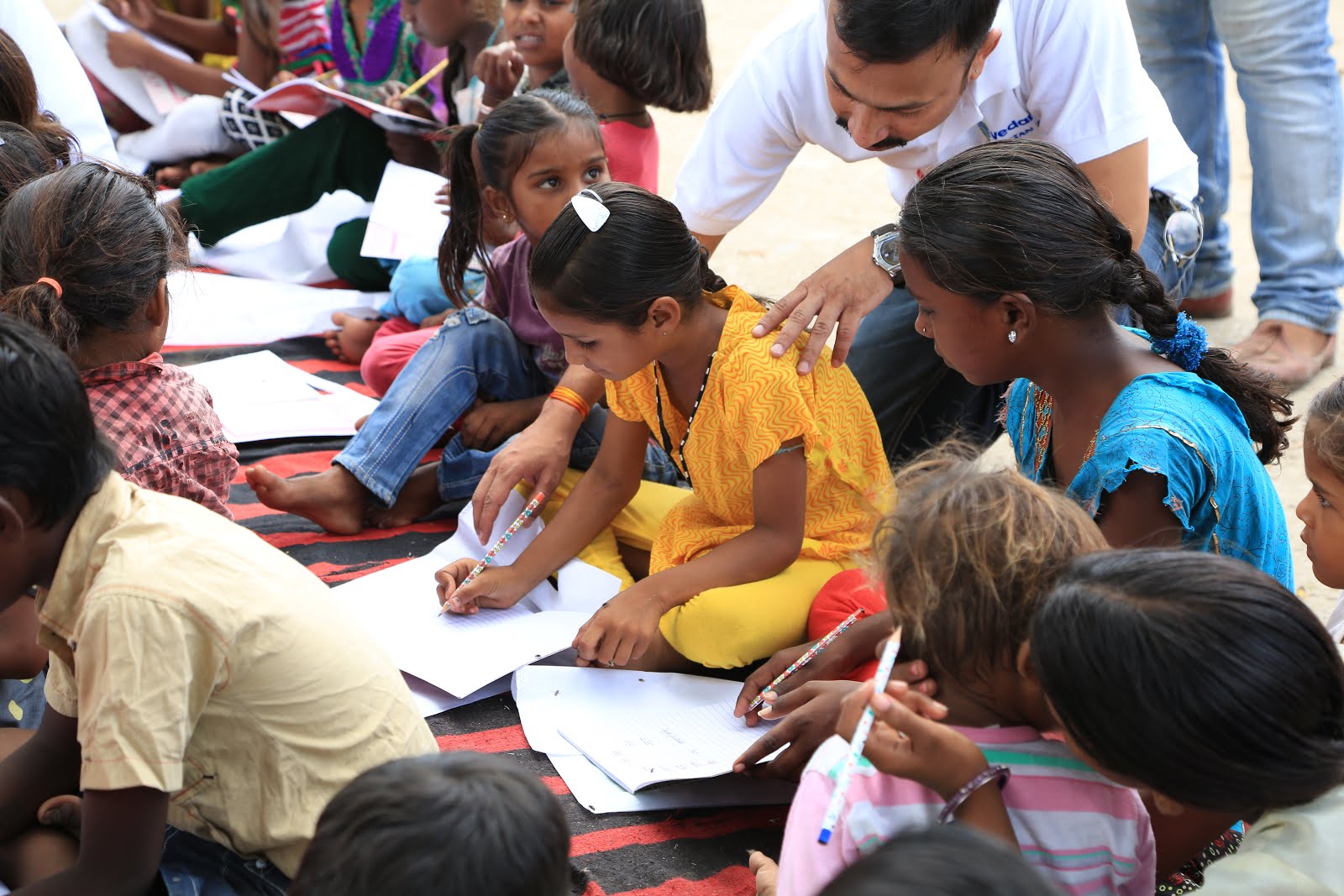
KHUSHI team was organized the workshop and about 150 children, in the age-group of 3 to 15 years with almost 70% girls, participated in the workshop which had lessons on literacy, creative skills, moral teachings and nutrition values.

“PROUD TO BE AN INDIAN TO ACHIEVE THIS FEAT”, BHAKTI SHARMA

 Bhakti to join “Khushi” and “Sakhi” campaign of Vedanta Hindustan Zinc

“It was chilling cold water at Antarctic Ocean and I could see small and big ice-bergs moving. The ocean was not clear. This was making the passage for my swimming difficult and challenging. At this juncture the ship helped in moving the small and medium ice-bergs and my passage was some-what clear. Second was to ensure that there are no ‘Leopard Seals’, a large fish that can eat whales. My distance was set to be travelled towards the ship. Before entering the water, I thought of my country and I realized this is the day I can make my country India proud”, said Bhakti Sharma who has just returned to India after setting world record in open-water swimming.

Hindustan Zinc, a Vedanta Group company in zinc-lead-silver business in Rajasthan had supported and sponsored Bhakti Sharma for this venture. “I had lost all hopes and that is where Hindustan Zinc came forward and instantly agreed to support me. Had I not received this support, I would have never been able to achieve this success’, said Bhakti Sharma.

Bhakti travelled 1.4 miles in 1 degree temperature in Antarctic Ocean on 10th January 2015. She is the first women of India to achieve this feat, beating the record of British open water swimming champion Lewis Pugh and American swimmer Lynne Cox. She is now the youngest citizen of the world and the first Asian girl to have achieved this success. Bhakti Sharma has now conquered all the 5 oceans of the world and she has broken this record after 12 years.

“The crew members on the ship found it difficult to believe an Indian coming to attempt such a feat as the Indian climate is extremely different from those conditions. We do not have such chilling cold in India and thus our bodies are not tuned to handle such cold water”, said Bhakti.

On what next Bhakti said, she would now work for the malnourished children and towards women empowerment in Rajasthan and would be joining Vedanta’s Hindustan Zinc campaign “Khushi” and “Sakhi”. Campaign “Khushi” is a non-funding campaign by the company that is spreading message towards care for the underprivileged children in India, for their nutrition, health and education. Campaign “Sakhi” is towards socio-economic empowerment of rural women. “I have spoken with Mr. Akhilesh Joshi, CEO of Hindustan Zinc about my interest and he has readily agreed’, said Bhakti.

Speaking on the occasion, Mr. Akhilesh Joshi, C
EO Hindustan Zinc said, ‘Bhakti Sharma achievement is a landmark success for India, we all are very proud. Her achievement only proves that Indian girls can do marvels if given the right opportunities and support. Hindustan Zinc is a Rajasthan based company and Bhakti Sharma is from Rajasthan too. In the past also we have supported Rajasthan sports talents and we would continue to do so.”

President and Prime Minister too lauded open water swimmer Bhakti for her accomplishment of setting this world record.

VEDANTA KHUSHI - TIMES OF INDIA - GOVT SETS TARGET FOR CHILD IMMUNIZATION

TIMES OF INDIA
28th December, 2014

In a bid to accelerate immunization coverage, the health ministry has set a target of over 5% to vaccinate children every year.The ministry has launched `Mission Indradhanush' to cover all children who are either unvaccinated, or are partially vaccinated against seven vaccine preventable diseases which include diphtheria, whooping cough, tetanus, polio, tuberculosis, measles and hepatitis B.
In 2009, immunization coverage was estimated at around 61% and by 2013 it increased to 65%, indicating only 1% increase in coverage every year.

“The Mission mode has been adopted to achieve target of full coverage by 2020,“ health minister J P Nadda said.

The mission logo, depicting the seven colours of the rainbow, was launched on Good Governance Day to mark the birth anniversary of Bharat Ratna Shri Madan Mohan Malaviya and birthday of Bharat Ratna Shri Atal Bihari Vajpayee.

In the first phase of the mission, the ministry has identified 201 high focus districts in the country with nearly 50% of all unvaccinated or partially vaccinated children. “These districts will be targeted by intensive efforts to improve the routine immunization coverage,“ Nadda said. Of the 201 districts, 82 districts are in just four states of UP, Bihar, Madhya Pradesh and Rajasthan as nearly 25% of the unvaccinated or partially vaccinated children of India are in these 82 districts of four states.

Under the mission, the ministry plans to conduct four special vaccination campaigns between January and June 2015 with intensive planning and monitoring of these campaigns.

According to Nadda, the learnings from the successful implementation of the polio programme will be applied in planning and implementation of the mission.

While 201 districts will be covered in the first phase, 297 will be targeted for the second phase in the year 2015.

The ministry will also seek technical support from WHO, UNICEF, Rotary International and other donor partners.

VEDANTA KHUSHI - TIMES OF INDIA - 80% IN RURAL INDIA DON'T GET REQUIRED NUTRITION

TIMES OF INDIA
27th December, 2014


In the past two decades, India's eating habits have changed but the nutritional level seems to be the same, a recent survey has found. Across the board, people are eating less cereals, replacing them with more fat and snacks, beverages and processed foods. Protein consumption has declined in rural areas and remained the same in urban areas.


The average calorific val ue of food consumed was 2,099 kilocalories (Kcal) per person per day in rural areas and 2,058 Kcal in urban areas in 2011, according to the survey report released last week by the National Sample Survey Organisation (NSSO).This is less than the nutritional value in 1993-94, when a similar survey had found the levels at 2,153 in rural areas and 2,099 in urban areas.

The National Institute of Nutrition, ICMR, recommends 2,320 Kcal a day for a man aged 18-29 years, weighing 60kg and in a sedentary job. Kerala, Tamil Nadu and Gujarat have nutritional levels that are almost 10% lower than the national average for rural areas while UP, Punjab, Haryana and Rajasthan have levels 10 to 20% higher, according to a National Sample Survey Organisation (NSSO) survey .

Another shocking aspect is the huge difference in nutritional intake of the poor and the rich. In rural India, a person belonging to the poorest 10% of population has a daily calorie intake of less than 1,724 Kcal, which includes 45g of protein with protein consumption at about 45g and 24g of fat. At the other end, a person from the richest 10% segment consumes more than 2,531 Kcal every day , almost 47% more than the poor person. A similar chasm can be seen in protein and fat consumption too.

In urban areas, this gap is worse. The poorest people get less than 1,679 Kcal per day while the richest get over 2,518 Kcal each -a difference of nearly 50%.

Almost 80% of rural people and 70% of urban people are not getting the government-recommended 2,400 Kcal per day worth of nutrition, a situation that has very harmful health implications, apart from its sheer inhumanity .

At the national level, daily protein consumption dipped from 60.2g for a person in 199394 to 56.5g in 2011-12 in rural areas and from 57.2g to 55.7g in urban areas. Oil and fat consumption increased from 31 to nearly 42g in rural areas and from 42 to 52.5g in urban areas.

The shares of items like fruits and vegetables, dairy products and egg, meat and fish was about 9% in 1993-94 which has marginally changed to about 9.6% in 2011-12.

The only food item that has seen a substantial jump in intake is classified as `other' in the survey and consists of various hot and cold beverages, processed food like chips, biscuits etc. and snacks. In 1993-94 these made up just 2% of a rural person's nutritional intake but rose to over 7% in 2011-12. In urban areas, this was 5.6% earlier and increased to about 9%.

The report also estimates that the survey would have counted food bought and prepared in a household but eaten by visitors or employees. If this is accounted for, calorific values get reduced by as much as 15-17% in rural areas and 5-6% in urban areas.

VEDANTA KHUSHI - WILL YOU TAKE A STAND??

Don't accept tea and food from children at Dhaba (road-side shop)

We were travelling and wanted to have a good cup of tea on a Dhaba.. As I was driving with family the first clean Dhaba we saw and we decided to have tea there. The owner of the Dhaba was shouting for supplying tea and food to customers. We saw few children in the age group of 10-12 years serving tea to customers. 

Our conscious did not allow us to have tea from such a small child. Giving order to a small child was hurting our inner conscious. My child of 10 years was sitting next to me and his obvious question was why they don't go to school. I could see him very uncomfortable.

With some thought I spoke to the Dhaba owner and asked him about how many child labour work in his Dhaba and why they work. Kishan, the owner, was quite annoyed and he asked me to have tea, pay the bill and leave. If I don't want to have tea, he is still fine with it. He did not like my questioning him.

I preferred not to have tea..my conscious did not allow me. I thought, will my refusal do anything... my refusal was supported by 4 in the family.. We all travel and we all eat at Dhabas. 


If we all decide not to be selfish and not to support such Dhaba owners and refuse to take anything from such children.. may be after few weeks or months, these children would go to school or do something constructive.....Just think about it

Pavan Kaushik

VEDANTA KHUSHI - CHIRPING 'CHANCHAL'

Chanchal is a small child of about 6 years, the only child of a mother, who does house-hold work and a father, who is a driver. Chanchal one day came with her mother to the house as it was her school holiday and her father had also gone for duty. It was a first glance of Chanchal, a sharp, active, innocent girl who cannot control her talkative nature. While her mother made her sit at a corner and started doing the house-hold work, she constantly glued her eyes on television which was showing some bollywood numbers.  Her hands, legs and head were matching the rhythm of the songs and she was whispering the lyrics too.

Chanchal, an amazing childhood prodigy, capable of bringing smiles on any face. Her presence filled the entire house with energy.

After a few minutes Chanchal opened her bag she had brought with her and took out few story books. Surprized, the story books were in English. She sat with her books and started connecting words. One could easily sense that she was trying to connect to the story. The story book prominently marked ‘Panchantra’. I am sure she was not able to gather meaning of most of the words, but pictures were enough to make her narrate the story, herself.  Speaking to her, she told about all her school friends, about teachers and also how she has become the class monitor. ‘I control every one’ she said.

Chanchal was giving a lesson to all those who think the people who work in our houses do not have dreams. People who have ultimately compromised with their lives.

Her mother Anita informed that Chanchal is a sparkling child who has dream to become big and work in office and cannot see her mother working door to door. It was a touching moment. Chanchal is fond of English as someone told her that if you have to become big, you must learn how to read and speak English. Chanchal’s father regularly narrates a story in English to make her sleep. That’s how she remembers stories and narrates them with pictures.

Anita has aligned with dream of Chanchal. Both the parents are sending her to a private school and her scoring is better than all in the class. She participates in debates and sports. Anita has taught her to support cleanliness and hygiene. Right from brushing her teeth twice a day, one can easily note her tidy combed hair and clean dress.

I was happy to meet this little chirping Chanchal who made my day wonderful. 

Vedanta's "Khushi" campaign is all about seeing the smiling faces of children like 'Chanchal' who are determined to make a future for themselves and for their parents.

VEDANTA KHUSHI - BUSINESS STANDARD - PUNISH PARENTS FOR FORCING KID INTO CHILD LABOUR, HC TOLD

IANS  |  New Delhi  
The Delhi High Court has sought a response from the central government on a plea seeking directions to prosecute parents who force their minor child into the labour market.
A division bench of Justice G. Rohini and Rajiv Shah Endlaw issued notice to the labour ministry and ministry of woman and child welfare and fixed Oct 29 as the next date of hearing.
The court was Wednesday hearing a public interest litigation filed by advocates Anu Mehta and Rubinder Pal Ghumman seeking formulation of guidelines for handling cases of child labour to ensure that every offender, including a delinquent parent, be dealt with sternly.
The plea said guidelines were required to create a state of 'zero tolerance' to stop child abuse.
"Children are immature, tender and incapable of guarding in situations of economic and physical exploitation as they lack the understanding, maturity and strength to protest against exploitation wrecked at the hands of parents," it said.
It also sought measures and comprehensive mechanisms to deal with child-related laws and crime against children as, the advocates claimed, there was an inherent flaw and lacunae in the Child Labour (Prohibition and Regulation) Act and Children (Pledging of Labour) Act.
No punitive action was directed against erring parents who actively exploit their children, the advocates contended.
"State mechanism must be created to investigate the role of parents in child abused otherwise the government will not be able to reach the root of the problem and the recovery of children subjected to trafficking will be re-routed to the erring parents," the plea said.
It said it has been seen in a growing number of cases that parents actively push their minor children into the labour market, acting with collusion with exploiters and child traffickers and thus have "active role in participation in perpetrating crimes towards their own children".

View the Link:- http://www.business-standard.com/article/news-ians/punish-parents-for-forcings-kid-into-child-labour-hc-told-114081600553_1.html 

VEDANTA KHUSHI - TIMES OF INDIA - IN NCERT MANUAL - MIDDAY MEALTIME RIGHT FOR TEACHING GREEN BEHAVIOUR

Aug 17 2014 : The Times of India (Delhi)

The one hour given to midday meals (MDM) in schools is an opportunity for discussing a variety of issues related to sustainable development. The MDM scheme, introduced mainly to encourage kids to enroll and remain in school can be used as teaching aid, argue the authors of a recently-compiled manual on education for sustainable development for elementary schools published by National Council of Educational Research and Training (NCERT).

`Towards a Green School' says that MDM provides a ready setting for discussing "resource conservation" (fuels used and cooking practices), pollution (type of cooking device), socio-cultural exchanges (types of food and taste), health and others.

Treating sustainability and environment as yet another subject isn't enough anymore.

United Nation's `Decade of Education for Sustainable Development' will be up in 2015 but there's much to be done.

While ESD requires “infusion of environmental and sustainability perspectives into the school curriculum“ what has actually happened, as the manual writers observe, is that “at the school level the responsibility for this lies exclusively with teachers teaching the environmental component, thus limiting it to a subject-centric role.

The manual uses several Delhi government schools as examples of institutions that are doing it right. A government school in Baprola has an `eco-park', a gazebo made of waste pipes and a water harvesting system. The students make compost with the surplus being sold. Government Girls' Senior Secondary School (No. 1) in Tilak Nagar ran a “my plant in my school“ drive-each student sowed a sapling and took care of it. As water at the school was in short supply, some kids brought water from home.

The communal midday meal, however, is one exercise all elementary school children take part in and the manual, preparedly by Kavita Sharma of NCERT's department of elementary education, stresses on using this. Teachers may encourage students taking MDM to inquire into where ingredients are grown, how they are procured, in what quantities and at what costs and even how they are stored and cooked. This, in turn, will help initiate discussions on hygiene, the link between the nature of ingredient and geography and nutrition.

The manual encourages teachers to undertake audits--including natural light, ventilation, cleanliness, ambient temperature, noise, accessibility, seating and water use to find out exactly how `green' their schools are.

View the Link: http://timesofindia.indiatimes.com/articleshow/40324824.cms 

VEDANTA KHUSHI : TIMES OF INDIA ARTICLE : 2.3CRORE KIDS IN INDIA MALNOURISHED


 Subodh Varma
4th August, 2014

Bihar Has Dubious Distinction, Maximum Percentage Of Underweight Kids: ICDS

About 2.3 crore children in India, up to 6 years of age, are suffering from malnourishment and are under-weight, according to a status report on the anganwadi (day care center) programme, officially known as ICDS.

This staggering number amounts to over 28% of the 8 crore children who attend anganwadis across India.

The status report includes state-wise data for underweight children. In Bihar, the proportion of under-weight children is nearly 50%. Andhra Pradesh (37%), Uttar Pradesh (36%), Rajasthan and Chhattisgarh (both 32%) are some of the other large states with a high proportion of children being malnourished.

Delhi reported that a shockingly high 35% of the nearly 7 lakh children who attend anganwadis were underweight. This shows that the extent of poverty and malnutrition amongst the urban poor is comparable to rural areas despite all the advantages the cities offer.

In all the northeastern states except Assam, Tripura and Meghalaya, less than 10% of children were underweight children. Other large states with a comparatively low rate of malnutrition are Maharashtra (11%) and Tamil Nadu (18%).

There has been no comprehensive survey of children's malnutrition in India since the last National Family and Health Survey in 2005-06. That had estimated 46% of children in the 0-3 years age group as underweight after surveying a sample of about 1 lakh households across the country . The data from anganwadis provides a snapshot drawing upon a much larger base.

There were an estimated 16 crore children of ages up to 6 years in the country, as per the 2011 Census. Of these, about half seem to be attending the anganwadis going by the records of the programme. Most of those attending anganwadis belong to poorer sections. But large sections do not get access to it. A 2011 Planning Commission evaluation had said that there is a shortfall of at least 30% in coverage.

There are over 13 lakh anganwadis which look after the kids and provide `supplementary nutrition' to them.

As part of their duties, personnel at each anganwadi weigh the attending kids every month and keep a record.

TOI contacted anganwadi workers from several states to confirm the weighing procedures. Till recently, two weighing instruments were provided for each anganwadi center. 

VEDANTA KHUSHI - HINDUSTAN ZINC ADOPTS 152 RURAL SCHOOLS IN RAJASTHAN TO IMPROVE INFRASTRUCTURE

112 schools were adopted earlier and the work is in progress, MoU for additional 40 schools signed today


To improve the infrastructure in government run rural schools Hindustan Zinc today signed the MoU with the District Education Department, Government of Rajasthan to adopt another 40 Government schools, including Girls’ Schools in Udaipur District, covering Udaipur City(10), Zawar(12), Maton(8) and Debari(10) areas.  The company had recently adopted 112 government schools in Bhilwara(72), Chittorgarh(20) and Rajsamand(20) to improve infrastructure facilities in these schools. 

The infrastructure work in these schools is already in progress.With signing of MoU to improve infrastructure in 40 schools in Udaipur, Hindustan Zinc shall be improving infrastructure in 152 schools with a cost of over Rs. 5 crore.

Many studies have pointed out that in order to improve the enrollment in government run schools, there is a dire need to improve the infrastructure, which includes not only repairs of the building but also sitting facilities, black-boards, electricity fittings and teaching aids. 

Through this project, Hindustan Zinc is providing basic infrastructure facilities like construction of boundary wall, class rooms, labs, installation of hand pumps, ceiling fans, coolers, construction of toilets, playground and furniture. Besides, scholarships to meritorious students will also be given and to keep up the green belt in schools, special plantation drives would be conducted.

UNICEF report has also stated that in rural Rajasthan, the female literacy is about 42 per cent. The sharp drop in secondary school attendance, particularly among girls is because of no drinking water facilities, lack of separate toilets for girls, no proper teachers, improper infrastructure etc. which is a matter of concern and requires immediate action.The company had two years back launched a social media campaign "Khushi" which brought out the issue of infrastructure improvement in schools in several on line debates and discussions

Taking the campaign forward, Hindustan Zinc decided to improve the infrastructure and give better facilities to students and improve their education quality."Hindustan Zinc is quite pleased with the progress of the work already initiated in 112 schools and looking forward to complete the work at the earliest. This project under the PPP model is expected to improve the quality of education in these schools", said Pavan Kaushik, Head of Corporate Communication.

To ensure the smooth running of project, a committee has been formed comprising members from HZL and members to be proposed by the District Collector. Based on the need of the school authority and the budget allotted, the project will be executed by Hindustan Zinc, Pavan Kaushik informed further.

Mrs. Krishna Chauhan - DEO(Secondary) thanked Hindustan Zinc for their support in bringing quality education in the government school by way of taking up the project towards improving the infrastructure. Ms. Sushma Sharma - Head CSR, HZL briefed all about the CSR initiatives being undertaken by Hindustan Zinc.  Mr. CSR Mehta - Head Corporate Relations spoke about the necessity to improve the infrastructure in the schools but also emphasized that the project should also monitored by Principals to ensure timely execution. Mr. Bhupendra Jain - DEO(Elementary) spoke about how Hindustan Zinc initiative is improving health and education in schools and has helped these children.

The MoU was signed today by Ms. Sushma Sharma, CSR Head on behalf of Hindustan Zinc and from Education Department by Mrs. Krishna Chauhan, District Education Officer (Secondary) and Mr.  Bhupendra Jain, District Education Officer (Elementary).  Also present on the occasion were Mr. CSR Mehta - Head Corporate Relations, Mr. Pavan Kaushik - Head Corporate Communication, Dr. S.S. Jamrani - Additional Director (Mines), Mrs. Hemlata Manaria - ADEO (Secondary), Dr. Suyesh Chaturvedi - Principal GSSS Gudli, Mrs. Nirja Rodgers - Principal GGSSS Bhupalpura and Mrs. Gauri Jamrani - Principal Ambamata Girls School.

VEDANTA KHUSHI: TIMES OF INDIA ARTICLE: HUNGRY FOR VOTES, BUT NO NETA TO FIX MALNUTRITION PROBLEM

Rema Nagarajan
15th April, 2014


Politicians Call It A ‘Shame’, But Do Little To Cure Ills That Plague System

In January 2012, PM Manmohan Singh declared half of India’s children were malnourished and that was a national shame. Yet since then, not a single comprehensive national survey was conducted to determine the acuteness of the problem or measure progress, if any, of steps initiated to address malnutrition. Worse, the issue figures in a token manner in the election discourse of political parties and candidates.
The 2005-06 National Family Health Survey was the last one conducted and it found 48% of children suffered chronic malnourishment — of them, 20% acute malnourishment. The survey concluded that over half the women were anaemic and 36% underweight. The Global Hunger Index, released in October 2013, placed India among a group of countries with ‘alarming’ levels of hunger, figuring at the bottom of the heap, below China, Sri Lanka, Pakistan and several in sub-Saharan Africa.
Key interventions to boost nutrition levels include the targeted public distribution system (TPDS), Integrated Child Development Services (ICDS) and the school midday meal scheme (MDMS).
Despite increased food production and procurement for TDPS, food insecurity persists and is a chronic problem linked to poor delivery. The large number of ineligible or fake ration cards issued — a serious problem in some states, usually those that need TPDS the most — has caused huge leakages. The TPDS has glaring exclusion errors. About 20% of the estimated 90 crore eligible beneficiaries are denied subsidized grain as they have no ration card, while 20% of the not-poor do. TPDS remains restricted to wheat and rice that would alleviate hunger, but not address malnutrition. No recommendation to include pulses, oil and nutritious millets has been implemented. Even the food security Act — that UPA counts among its mega achievements — focuses on rice and wheat. Had the Act included higher procurement of millets, pulses, fruits and vegetables, it would have incentivised production of these, instead of just rice and wheat that are water-intensive crops.
ICDS was meant to counter malnutrition in children between 0 and 6 years and pregnant women. Government allocation, including states’ share, increased from over Rs 5,200 crore in 2007-08 to Rs 13,700 crore in 2013-14 and the number of anganwadi centres (AWCs) has increased from 10.1 lakh to 13.1 lakh in 2012-13.
Though almost 90% anganwadis are operational, the ICDS scheme reaches about 47% of eligible children, reported a CAG audit. Coverage in states varies from about 75% in Odisha to 18% in Bihar. Most AWCs lack infrastructure. In 2011-12, only 57% had drinking water on the premises, 47% had toilets and only 25% had a kitchen.
ICDS is meant to provide supplementary nutrition 300 days a year, or 25 days a month. But the number of days the programme worked ranged from 180-250, a CAG audit found. The audit revealed irregularities such as insufficient monitoring, suspected misappropriation of supplies, badly-trained anganwadi workers and shortfall in expenditure on supplementary nutrition, which meant lower per beneficiary expenditure. For a flagship programme that addresses a “national shame” the ICDS programme leaves much to be desired.
Allocation for the midday meal scheme is up from Rs 6,700 cr to over Rs 10,300 cr between 2007-08 and 2011-12. But many states aren’t meeting yearly targets of number of meals served. The scheme’s plagued by reports of children falling ill from eating poor quality or spoiled food. Many states are yet to achieve standards set to run it: constructing a kitchen shed, timely lifting of grains, proper food storage. Women employed as midday meal cooks remain underpaid.
While proportion of malnourished children has fallen since 2005-06, not only has the decline been slow, from 46% malnourished to about 33% by 2013, it’s been uneven with a few states and districts getting worse. But with poor tracking of the schemes’ implementation, or of the population’s nutritional status, no one seems sure if the situation has become any better or worse. And that’s the national shame.
HUNGER POLITICS | Aug 2012 | Modi quoted in interview blaming malnutrition in Gujarat on its “by and large vegetarian diet”. Because it’s a middle-class state, Gujarat is “more beauty conscious than health conscious”Media reports laid bare the bluff: His contentions didn’t square with data whichever way it was spliced. Haryana, even more vegetarian than Gujarat, has better nutritional figuresNSSO data (2009-2010) showed poverty behind state’s poor nutritional indices.
SERVED DEATH | Scams plague the mid-day meal scheme. Last July 27 village children died in Bihar’s Chapra after having the meal. Nitish Kumar cried conspiracy – that they were poisoned. Fact was, there was no monitoring, and the principal ran a racket, serving kids substandard fare.