Gurukshetra Stories and Incidents

M/s Gurukshetra Consultancy has focus on strategic communication (Advocacy), Promotors, senior Leadership and CXOs image & positioning, aligning Corporate Social Projects with corporate objectives and streamlining internal communication of corporate structure. M/s Gurukshetra Consultancy is all about defining unlimited contribution and scope of Gurus of Corporate World towards positioning industry, society at large and the country, their Kshetra. Gurukshetra would also feature success stories of CXOs and professionals - people who matter and are Gurus of their own Kshetra.
Showing posts with label Khushi. Show all posts

VEDANTA KHUSHI - MINT - STATES SHOULD SPEND MORE ON NUTRITION

Greater fiscal autonomy has not yet translated into higher spending on nutrition by states

Malancha Chakrabarty September 11th, 2017
India’s record in addressing undernutrition is abysmal. With a stunting rate of 38.4%, India accounts for about a third of the world’s stunted children. Photo: AFP
Mohandas Karamchand Gandhi once said, “There are people in the world so hungry, that God cannot appear to them except in the form of bread.” Sadly, hunger and undernutrition continue to plague our country. India’s record in addressing undernutrition is abysmal. With a stunting rate of 38.4%, India accounts for about a third of the world’s stunted children. The proportion of wasted children in India increased from 19.8% in 2005-06 to 21% in 2015-16. Moreover, in states like Bihar and Madhya Pradesh, more than 40% of the children are underweight. Thus, nutrition should be high on India’s list of development priorities.
To be fair, India has a number of nutrition intervention programmes under different ministries. In absolute terms, India’s expenditure on nutrition schemes is quite high at Rs2.98 trillion but this is woefully inadequate if we take into account the level of deprivation in India.
Moreover, dramatic changes in the fiscal architecture based on the recommendations of the Fourteenth Finance Commission have raised serious concerns with regard to public spending on nutrition.
There has been a substantial decline in allocation for Central schemes. The Integrated Child Development Services Scheme (ICDS), a key scheme which provides basic education and health services to women and children below six years, suffered serious budget cuts. Allocation for ICDS declined consistently from Rs16,684 crore in 2014-15 to Rs15,489 crore in 2015-16 and Rs14,736 crore in 2016-17. Although 2017-18 saw an increase in the allocation for ICDS to Rs16,745.2 crore, this figure is only 0.5% higher than the actual expenditure incurred in 2014-15.
In the case of other schemes, like the Rajiv Gandhi Scheme for Empowerment of Adolescent Girls, also known as Sabla, and the Mid-Day Meal Scheme (MDMS), budget cuts were deeper. The outlay for Sabla declined from Rs622.4 crore in 2014-15 to Rs475.2 crore in 2015-16, and to Rs460 crore in 2016-17. In 2017-18, the allocation has been kept at the same level as 2016-17, which actually implies a decrease in allocation in real terms.
In the case of MDMS, there was a persistent decline in allocation from Rs10,917.6 crore in 2013-14 to Rs10,523.4 crore in 2014-15, and further down to Rs9,144.9 crore in 2015-16. In 2017-18, there was only a 3% increase in allocation, from Rs9,700 crore in 2016-17 to Rs10,000 crore. Again, the allocation in 2017-18 is lower than the actual expenditure of Rs10,761.4 crore incurred under the scheme in 2012-13. Even the 3% increase over last year does not mean much if inflation is factored in.
However, some Central schemes did witness an increase in allocation. The Maternity Benefit Programme, a conditional cash transfer to pregnant and lactating women to provide compensation for wage loss and adequate nutrition and rest, witnessed an increase in allocation from Rs634 crore in 2016-17 to Rs2,700 crore in 2017-18. The total cost of the programme up to 2019-20 is Rs12,661 crore for 5.17 million beneficiaries. However, nutrition experts regard this as inadequate because the number of beneficiaries under other schemes, notably the Janani Suraksha Yojana, was much higher at about 7.5 million, and that too in 2015-16.
Although the whole argument behind fiscal restructuring was that with more resources at their disposal, states would step up their expenditure, data on state budget allocation for nutrition schemes is not encouraging.
In fact, 2015-16 witnessed a decline in budget allocation in many states. In Uttar Pradesh, the total budget outlays for nutrition-specific interventions declined from Rs4,358.1 crore in 2014-15 to Rs4,054.9 crore in 2015-16, and subsequently increased to Rs4,573.3 crore in 2016-17. Budget outlays for micronutrient supplementation and deworming declined from Rs67.7 crore in 2014-15 to Rs58.9 crore in 2015-16, and Rs56.5 crore in 2016-17.
Similarly, in Odisha, the budget for nutrition-specific interventions declined from Rs1,188 crore in 2014-15 to Rs961 crore in 2015-16, and then increased to Rs1,302 crore in 2016-17.
In Bihar, there was a small increase in the allocation for nutrition-specific interventions, from Rs1,778 crore in 2014-15 to Rs1,972 crore in 2016-17. Rajasthan witnessed a modest increase in outlay for nutrition-specific schemes from Rs975 crore in 2014-15 to Rs1,022 crore in 2015-16 and Rs 1,106 crore in 2016-17. But budget allocation for nutrition-specific schemes in 2016-17 is 13% lower than the budget allocation in 2014-15.
Thus, greater fiscal autonomy has not yet translated into higher spending on nutrition by states.
Two critical questions emerge. First, can the Centre renege on its responsibility at a time when a large proportion of India’s children are undernourished?
Second, given that states have a greater responsibility, what can be done to ensure that they step up their allocation for nutrition?
While the former is an ideological question, here are some recommendations for the latter. Firstly, the Centre and state should work together to set nutrition targets for every state and district. Secondly, the Centre should play a more proactive role in monitoring the nutrition programmes of every state. Lastly, effective steps need to be undertaken to upgrade capacity at the state level.

Read On: http://www.livemint.com/Opinion/m4LD40v1SB6S4OOSs0FCoL/States-should-spend-more-on-nutrition.html  
Malancha Chakrabarty is associate fellow at the Observer Research Foundation.

VEDANTA KHUSHI - KHUSHI TEAM ORGANIZED A WORKSHOP WITH 150 SLUM CHILDREN

Vedanta Khushi  believes in making combine efforts to bring the change.
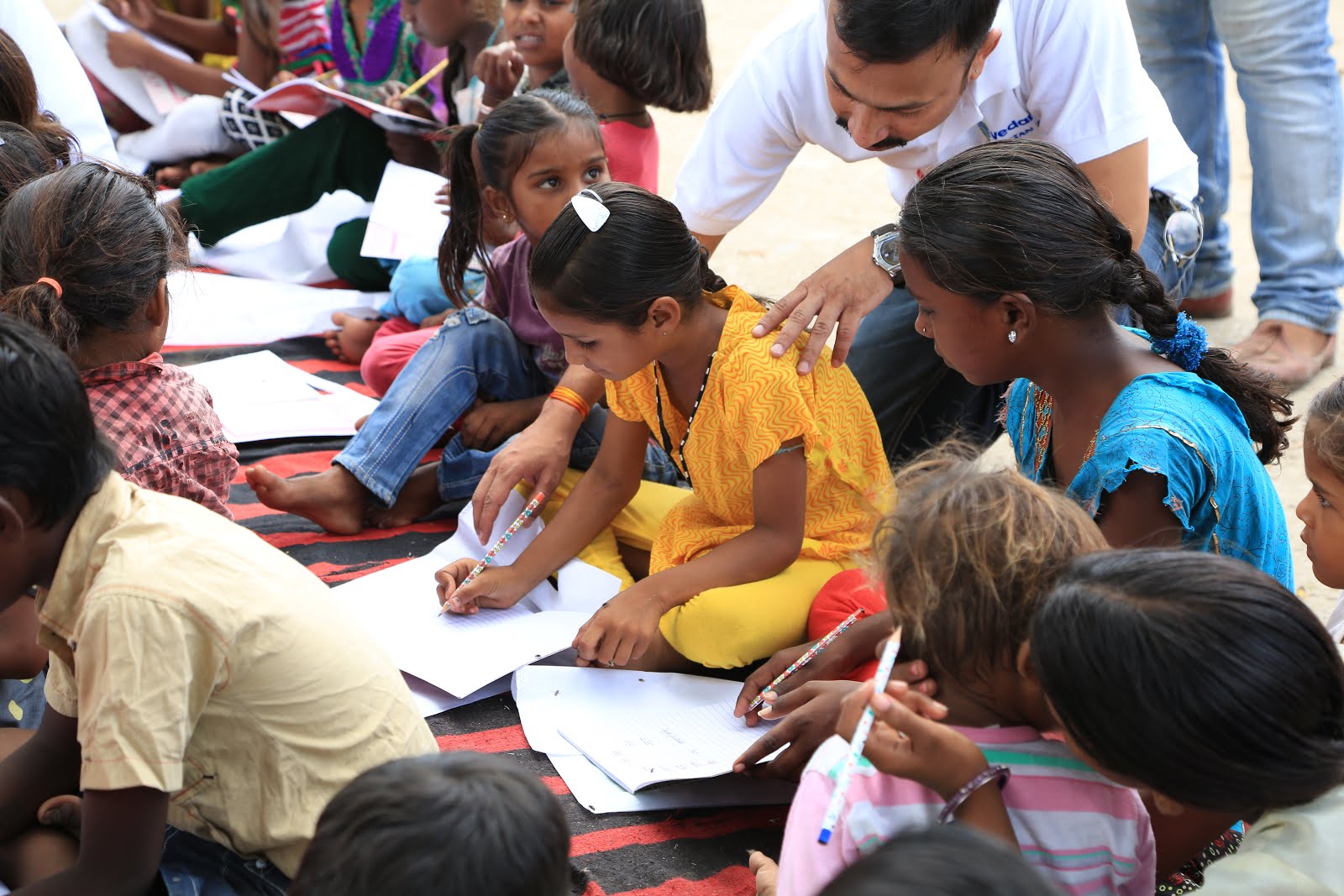
KHUSHI team was organized the workshop and about 150 children, in the age-group of 3 to 15 years with almost 70% girls, participated in the workshop which had lessons on literacy, creative skills, moral teachings and nutrition values.

A KHUSHI DATE WITH CHILDREN OF BEDAVAS


Over 125 children of different age-groups gathered around us to horde the basic items we brought for them towards their hygiene. A set of toothbrush, toothpaste, comb and soap was all that took for them to ascend in huge numbers”, Devika Gupta a member of Khushi Group

If I ask you, ‘What is the most important thing to you?’ The answers would range from family, well-being, good health, contentment and happiness. The one thing which is not a mainstream priority in our check list but is something that is omnipresent, for which all of us are running is - happiness. How you interpret happiness and how others might can be completely different while the essence of it remains the same.
‘Khushi’, literally translated as happiness, is an initiative by Hindustan Zinc, a company of Vedanta Group, which is aiming to spread smiles in deprived and underprivileged children. Other than inciting beaming faces, it also realizes the importance of the age old saying – ‘health is wealth’. Building up on the three most important pillars for a child’s welfare, Khushi believes in ‘health’, ‘nutrition’ and ‘education’ to such children.
India is a home to a third of the world’s total malnourished children and also houses 18 million kids who work on the streets. In such an unfortunate scenario, with such enormous and harrowing statistics ogling at us, there remains little hope that gives us solace for a better condition of these kids who are a part of the country’s future. Though India might be a growing economy with progressively emerging riches in the society, it still has around a fifth of the population below the poverty line that can barely afford minimum means of subsidence. That being said, I do not mean to bring you down or make you feel guilty, but to draw your attention to those who do not and might never get a chance to enjoy the lap of luxury that we intend to.
Now in our daily lives with busy schedules, where we are working hard and saving up for the future and our children, we do feel for those who cannot afford it. Here is where project Khushi steps in. It is said that ‘charity begins at home’, thus Khushi decided to spread happiness in a slum called Bedavas in Udaipur, Rajasthan. Over 125 children of different age-groups gathered around us to horde the basic items we brought for them towards their hygiene. A set of toothbrush, toothpaste, comb and soap was all that took for them to ascend in huge numbers. These kids were overjoyed to see us and could not wait 2nd July which is when the nutrition and education aspect would be taken care of by distributing fruits and teaching the kids to write their name.
2nd July is now enthusiastically awaited.

A KHUSHI DATE WITH CHILDREN OF BEDAVAS

“Over 125 children of different age-groups gathered around us to horde the basic items we brought for them towards their hygiene. A set of toothbrush, toothpaste, comb and soap was all that took for them to ascend in huge numbers”, Devika Gupta a member of Khushi Group


If I ask you, ‘What is the most important thing to you?’ The answers would range from family, well-being, good health, contentment and happiness. The one thing which is not a mainstream priority in our check list but is something that is omnipresent, for which all of us are running is - happiness. How you interpret happiness and how others might can be completely different while the essence of it remains the same.
‘Khushi’, literally translated as happiness, is an initiative by Hindustan Zinc, a company of Vedanta Group, which is aiming to spread smiles in deprived and underprivileged children. Other than inciting beaming faces, it also realizes the importance of the age old saying – ‘health is wealth’. Building up on the three most important pillars for a child’s welfare, Khushi believes in ‘health’, ‘nutrition’ and ‘education’ to such children.
India is a home to a third of the world’s total malnourished children and also houses 18 million kids who work on the streets. In such an unfortunate scenario, with such enormous and harrowing statistics ogling at us, there remains little hope that gives us solace for a better condition of these kids who are a part of the country’s future. Though India might be a growing economy with progressively emerging riches in the society, it still has around a fifth of the population below the poverty line that can barely afford minimum means of subsidence. That being said, I do not mean to bring you down or make you feel guilty, but to draw your attention to those who do not and might never get a chance to enjoy the lap of luxury that we intend to.
Now in our daily lives with busy schedules, where we are working hard and saving up for the future and our children, we do feel for those who cannot afford it. Here is where project Khushi steps in. It is said that ‘charity begins at home’, thus Khushi decided to spread happiness in a slum called Bedavas in Udaipur, Rajasthan. Over 125 children of different age-groups gathered around us to horde the basic items we brought for them towards their hygiene. A set of toothbrush, toothpaste, comb and soap was all that took for them to ascend in huge numbers. These kids were overjoyed to see us and could not wait 2nd July which is when the nutrition and education aspect would be taken care of by distributing fruits and teaching the kids to write their name.
2nd July is now enthusiastically awaited.

Vedanta Khushi : Vedanta's "Nand Ghar" Project Aligns With PM's Vision On Child Care


Ministry of Women & Child Development, Government of India and Vedanta Group have come together to construct 4000 modern Anganwadis – “ Nand Ghar” in different parts of the country. The first ‘Nand Ghar’ was inaugurated by the Hon’ble Union Minister of Women & Child Development, Government of India, Smt. Maneka Sanjay Gandhi on 24th June at Hasanpur village in district Sonepat, Haryana.  Anil Agarwal, Chairman of Vedanta Group was also present at the inaugural ceremony.  

Smt. Maneka Sanjay Gandhi, delighted at this unique partnership with Vedanta Group, entering into construction of 4000 “Nand Ghar” said,  “Nand Ghar” will be developed in some of the high burden districts where the Ministry is proposing to launch the ‘National Nutrition Mission’ shortly. “Mission will involve more non-government partners contributing collectively to one common objective of eliminating malnutrition” she informed.

Under the Public-Private-Partnership model, Vedanta Group and Ministry of Women & Child Development, Government of India will share the cost of construction of the “Nand Ghar”, which would have prefab structures with solar power. The land for the “Nand Ghar” would be provided by the Gram Panchayats and the construction will be undertaken by National Building Construction Corporation  Limited (NBCC).

Speaking on the occasion Anil Agarwal, Chairman - Vedanta Group said, “Nand Ghar” is an extension to the existing Anganwadi initiative and will be Vedanta  Group endeavour to provide a better environment to the children of India. Healthy children and empowered women will eradicate poverty and malnutrition, and make a prosperous nation. Our “Nand Ghar” project aligns with our honourable Prime Minister’s vision and commitment to provide quality education for children and skill development for women in the entire country,"

Vedanta’s “Nand Ghar“ will act as a focal area for immunisation, gender sensitisation and maternal care. It also aims to enhance the learning environment through an e-learning module and skill enhancement program for women. The “Nand Ghar” centres are proposed to be run as a shared space in which 50% of the time will be devoted to children’s education and the remaining half will support women’s skill development, Anil Agarwal added.

“This Nand Ghar model will provide targeted delivery of supplementary nutrition services along with related healthcare services for both mother and child including skill training for women,” said Smt. Maneka Sanjay Gandhi.  She also stressed on the need of having toilets in “Nand Ghar” for women to strengthen Swachh Bharat Mission.

Emphasised on the need of first-of-its-kind Public Private Partnership, she said “ Many come to me with projects but do not turn-up, but Anil Agarwal has kept his promise”.

Vedanta Group’s  philanthropic arm Vedanta Foundation has pioneered in the areas of child care. Since 2008, Vedanta Group has been time to time adopting Anganwadis for providing supplementary nutrition, primary education and health to underprivileged children. Recently it has signed an MoU with Rajasthan Government and adopted 3050 Anganwadi Centres.  Out of these 1000 Anganwadi Centres would be converted into Model Anganwadi Centres with facilities of child friendly toilets as well.

Aligning with the objective of child care, the Vedanta Group launched its campaign “Khushi” that is disseminating message on nutrition, primary education and health to deprived children and encourages individuals to take-up direct steps.

Hindustan Zinc, Vedanta Group company in Rajasthan is running a unique project “Sakhi” to empower rural and tribal women and develop them as rural women entrepreneurs.


VEDANTA KHUSHI - VEDANTA READIES RS 400-CR FUNDING FACELIFT FOR ANGANWADIS

The Vedanta Foundation, the philanthropic arm of metal and mining major Vedanta, will revamp 4,000 anganwadi centres across India by equipping them with TVs, solar panels and toilets.
The foundation will fund the modernisation drive with over Rs 400 crore, for which it has partnered with the Ministry of Women and Child Development (WCD), it said in a statement.
The first model Anganwadi, Nand Ghar, was inaugurated by Union Minister for WCD Maneka Gandhi today, along with Vedanta Group Chairman Anil Agarwal, at Hasanpur village in Sonipat district of Haryana.
Inaugurating the centre, Gandhi said: "This Nand Ghar model will provide targeted delivery of supplementary nutrition services, along with related healthcare services for both mother and child, including skill training for women."
The Minister hailed Vedanta's efforts in this regard.
"The Ministry of WCD and the Vedanta Group have come together to construct 4,000 Anganwadi buildings in different parts of the country. Nand Ghar is an extension to the existing anganwadi initiative and will be Vedanta Group's endeavour to provide better environment to children of India," said Agarwal.
Vedanta's Nand Ghar project aligns with Prime Minister Narendra Modi's vision and commitment to providing quality education for children and skill development for women in the entire country, he added.
The Vedanta Foundation has already collaborated with over 3,000 anganwadi centres in Rajasthan and Odisha by supplementing the services of the government and addressing the nutrition as well as the educational needs of over 1 lakh children. 

VEDANTA KHUSHI - TIMES OF INDIA - GOVT SETS TARGET FOR CHILD IMMUNIZATION

TIMES OF INDIA
28th December, 2014

In a bid to accelerate immunization coverage, the health ministry has set a target of over 5% to vaccinate children every year.The ministry has launched `Mission Indradhanush' to cover all children who are either unvaccinated, or are partially vaccinated against seven vaccine preventable diseases which include diphtheria, whooping cough, tetanus, polio, tuberculosis, measles and hepatitis B.
In 2009, immunization coverage was estimated at around 61% and by 2013 it increased to 65%, indicating only 1% increase in coverage every year.

“The Mission mode has been adopted to achieve target of full coverage by 2020,“ health minister J P Nadda said.

The mission logo, depicting the seven colours of the rainbow, was launched on Good Governance Day to mark the birth anniversary of Bharat Ratna Shri Madan Mohan Malaviya and birthday of Bharat Ratna Shri Atal Bihari Vajpayee.

In the first phase of the mission, the ministry has identified 201 high focus districts in the country with nearly 50% of all unvaccinated or partially vaccinated children. “These districts will be targeted by intensive efforts to improve the routine immunization coverage,“ Nadda said. Of the 201 districts, 82 districts are in just four states of UP, Bihar, Madhya Pradesh and Rajasthan as nearly 25% of the unvaccinated or partially vaccinated children of India are in these 82 districts of four states.

Under the mission, the ministry plans to conduct four special vaccination campaigns between January and June 2015 with intensive planning and monitoring of these campaigns.

According to Nadda, the learnings from the successful implementation of the polio programme will be applied in planning and implementation of the mission.

While 201 districts will be covered in the first phase, 297 will be targeted for the second phase in the year 2015.

The ministry will also seek technical support from WHO, UNICEF, Rotary International and other donor partners.

VEDANTA KHUSHI - TIMES OF INDIA - 80% IN RURAL INDIA DON'T GET REQUIRED NUTRITION

TIMES OF INDIA
27th December, 2014


In the past two decades, India's eating habits have changed but the nutritional level seems to be the same, a recent survey has found. Across the board, people are eating less cereals, replacing them with more fat and snacks, beverages and processed foods. Protein consumption has declined in rural areas and remained the same in urban areas.


The average calorific val ue of food consumed was 2,099 kilocalories (Kcal) per person per day in rural areas and 2,058 Kcal in urban areas in 2011, according to the survey report released last week by the National Sample Survey Organisation (NSSO).This is less than the nutritional value in 1993-94, when a similar survey had found the levels at 2,153 in rural areas and 2,099 in urban areas.

The National Institute of Nutrition, ICMR, recommends 2,320 Kcal a day for a man aged 18-29 years, weighing 60kg and in a sedentary job. Kerala, Tamil Nadu and Gujarat have nutritional levels that are almost 10% lower than the national average for rural areas while UP, Punjab, Haryana and Rajasthan have levels 10 to 20% higher, according to a National Sample Survey Organisation (NSSO) survey .

Another shocking aspect is the huge difference in nutritional intake of the poor and the rich. In rural India, a person belonging to the poorest 10% of population has a daily calorie intake of less than 1,724 Kcal, which includes 45g of protein with protein consumption at about 45g and 24g of fat. At the other end, a person from the richest 10% segment consumes more than 2,531 Kcal every day , almost 47% more than the poor person. A similar chasm can be seen in protein and fat consumption too.

In urban areas, this gap is worse. The poorest people get less than 1,679 Kcal per day while the richest get over 2,518 Kcal each -a difference of nearly 50%.

Almost 80% of rural people and 70% of urban people are not getting the government-recommended 2,400 Kcal per day worth of nutrition, a situation that has very harmful health implications, apart from its sheer inhumanity .

At the national level, daily protein consumption dipped from 60.2g for a person in 199394 to 56.5g in 2011-12 in rural areas and from 57.2g to 55.7g in urban areas. Oil and fat consumption increased from 31 to nearly 42g in rural areas and from 42 to 52.5g in urban areas.

The shares of items like fruits and vegetables, dairy products and egg, meat and fish was about 9% in 1993-94 which has marginally changed to about 9.6% in 2011-12.

The only food item that has seen a substantial jump in intake is classified as `other' in the survey and consists of various hot and cold beverages, processed food like chips, biscuits etc. and snacks. In 1993-94 these made up just 2% of a rural person's nutritional intake but rose to over 7% in 2011-12. In urban areas, this was 5.6% earlier and increased to about 9%.

The report also estimates that the survey would have counted food bought and prepared in a household but eaten by visitors or employees. If this is accounted for, calorific values get reduced by as much as 15-17% in rural areas and 5-6% in urban areas.

VEDANTA KHUSHI - BUSINESS STANDARD - PUNISH PARENTS FOR FORCING KID INTO CHILD LABOUR, HC TOLD

IANS  |  New Delhi  
The Delhi High Court has sought a response from the central government on a plea seeking directions to prosecute parents who force their minor child into the labour market.
A division bench of Justice G. Rohini and Rajiv Shah Endlaw issued notice to the labour ministry and ministry of woman and child welfare and fixed Oct 29 as the next date of hearing.
The court was Wednesday hearing a public interest litigation filed by advocates Anu Mehta and Rubinder Pal Ghumman seeking formulation of guidelines for handling cases of child labour to ensure that every offender, including a delinquent parent, be dealt with sternly.
The plea said guidelines were required to create a state of 'zero tolerance' to stop child abuse.
"Children are immature, tender and incapable of guarding in situations of economic and physical exploitation as they lack the understanding, maturity and strength to protest against exploitation wrecked at the hands of parents," it said.
It also sought measures and comprehensive mechanisms to deal with child-related laws and crime against children as, the advocates claimed, there was an inherent flaw and lacunae in the Child Labour (Prohibition and Regulation) Act and Children (Pledging of Labour) Act.
No punitive action was directed against erring parents who actively exploit their children, the advocates contended.
"State mechanism must be created to investigate the role of parents in child abused otherwise the government will not be able to reach the root of the problem and the recovery of children subjected to trafficking will be re-routed to the erring parents," the plea said.
It said it has been seen in a growing number of cases that parents actively push their minor children into the labour market, acting with collusion with exploiters and child traffickers and thus have "active role in participation in perpetrating crimes towards their own children".

View the Link:- http://www.business-standard.com/article/news-ians/punish-parents-for-forcings-kid-into-child-labour-hc-told-114081600553_1.html 

Vedanta Khushi : ET Article : The National Fight Against Malnutrition

Veena S Rao 
10th March 2014

The periodic public outcry over India’s malnutrition and hunger has curiously stopped despite repeated reports confirming the alarming situation. However, a welcome development is that political parties have raised the issue in the run up to the polls, recognizing nutrition as a determinant of development.

The perception among nutrition experts and NGOs has changed. The ICDS is no longer seen as a vehicle to tackle malnutrition. Rightly, the focus has shifted to an inter -sectoral approach, but the discourse gets stuck at this point. Without a national programme with an inter -sectoral template, no one including the government seems to know how exactly to intervene inter- sectorally. Many institutions are unable to address the problem on the ground, without a design or format to guide them. 

National programmes with a well defined structure such as the Sarva Shiksha Abhiyan, Midday Meal Programme or the National Rural Health Mission provide a fulcrum for NGOs to offer support without complication. The absence of a national programme to fight malnutrition denies such a platform, and results in an information void on what interventions are essential, and how best to undertake them. Hence, apart from organizing occasional conferences and “advocacy”, mostly on isolated themes, there is no concerted strategy on the ground to effectively address malnutrition afflicting people across age groups.

Public awareness and information on social and development issues is generated through strong national programmes. They become the strongest advocacy tools, taking the message to the grassroots, notably health, education and women empowerment programmes.

Information and awareness on malnutrition has no such medium, leading to the vacuum in information at the grassroots within families, communities, PRIs and field staff of NGOs and government on critical issues: preventing child under-nutrition, proper maternal nutritional care to ensure adequate weight gain during pregnancy and prevent low birth-weight babies (first casualties to neonatal mortality) and nutritional care of adolescent girls (the most undernourished in the world), who are future mothers. 

Lack of information and awareness cascades further into the absence of capacity creation at all levels and stages of the participation/implementation process and, more importantly, in the absence of demand for nutritional services from the afflicted population. This is why there are hardly any think tanks, research or capacity-building institutions at state or district levels. Also, there are no journals or information in local languages on the subject to educate people, and not even vernacular equivalents for terms like “body mass index” or “chronic energy deficiency”. 

Neither is there an enabling environment for a united and vocal nutrition lobby with strong leadership to influence government. There is negligible presence of public health/nutrition in research institutions in state capitals and none at all in district/ block institutions, where the action really lies. Besides, the nutrition lobby is disunited, often deflecting attention from the urgency of addressing malnutrition holistically. A strong, united nutrition lobby, providing innovation and working models, could have influenced the government to announce a national programme to address malnutrition. 

There is despondency about the governance environment to address malnutrition: lack of information and capacity among stakeholders, particularly the community, lack of demand and ostracism of the private sector that has a mandate to address malnutrition under new CSR norms. Old schemes and the army of Anganwadi workers are also a baggage for government. Instead of innovation, the creaking Anganwadi is being saddled with more activities, but sinking under the malaise of contractors, commissions and corruption. 

A comprehensive strategy to address malnutrition is perfectly doable. The Karnataka Nutrition Mission has piloted this, based on inter-generational, inter -sectoral interventions, bridging the dietary calorie-protein micronutrient gap, initiating grassroots awareness programmes and rigorous real-time monitoring, with encouraging results. Political parties must give top priority in their election manifestos to fight India’s malnutrition through a strong national programme. 

The writer is a former civil servant

VEDANTA KHUSHI : Film Star Shahrukh Khan Speaks on Girl Child : OUR GIRLS OUR PRIDE


Vedanta Group and NDTV have joined hands to promote Girl Child in India through campaign "Our Girls : Our Pride".  The campaign has been launched under Vedanta's "Khushi" awareness campaign, that is already promoting care for the underprivileged children, their health, nutrition and education.  


Shahrukh Khan speaks for the Girl Child, "I want everyone to give ideas and participate in events promoting Girl Child Issues"..... watch the video below....


Ms. Priyanka Chopra has been named the Brand Ambassador of the campaign "Our Girl : Our Pride" .  The campaign launched on 19th August 2013 in New Delhi,  will address key issues like nutrition, education, health, foeticide and infanticide.  The focus of the campaign will be to educate people at large, bring awareness, bring policy changes and sensitize people towards girl child and build a respect for the gender.

Looking at India, the country houses the maximum number of children in the world but it is also true that around 50% of child are suffering from malnutrition and the number of girls is large. The ratio of females per 1000 mails has been continuously decreasing since last more than 30 years.  There is a conscious need to not only protect the girl child but also bring in dedicated efforts towards their education, nutrition, health and overall development.

VEDANTA KHUSHI CAMPAIGN


Vedanta Khushi : Udaipur Walks for "Khushi", 100 Teachers Awarded

4th September 2013, what a day it was... more than 10,000 citizens of Udaipur, including a large number of students, walked for "Khushi".... taking the initiative forward.  The walk was also for the respect for their teachers, as it was just a day before the Teachers Day. 

5th September 2013, saw "Khushi" awards - about 100 Government and Private school teachers and their educational institution recognized for providing quality education.. "Khushi" Teachers Award 2013...


www.facebook.com/groups/vedantakhushi
Vedanta Resources plc - Vedanta Khushi

Vedanta Khushi : The Special Children of God

Few children make you smile instantly.  Strange is their smile also brings tears in our eyes. Out of love...... There are few children that god has made with  lots of love, affection and care..perhaps this is the reason, these children are known as 'special children of God'.  As these are special children,  they do require and need a lot of care and attention.  Many organizations are working consciously and tirelessly to ensure these children get their due attention.
One such organization is Vedanta Group, that started a project in Chattisgarh, the 'Vedanta Therapy and Rehabilitation Centre'.  The Vedanta Group company in Chattisgarh, BALCO,  has opened the "Vedanta Therapy and Rehabilitation Centre" for about 150 such children in Korba.  The centre is the first of its kind in the State of Chattisgarh, providing physiotherapy, speech therapy, work and behavior therapy, to name a few, to these children. Vedanta has tied-up with 'Inner Wheel Education Society' (that runs the Divya Jyoti Group of Schools) to run this Centre effectively.  Company has also constructed hostel rooms for 50 such children and providing transport assistance.

The main focus of 'Vedanta Therapy and Rehabilitation Centre' has been to tap the unlimited inner potential of these children and work towards their rightful position in the society. 

The parents of these children have a lot to say, 'Mrs. Anita Deshpandey, mother of Harsh Deshpandey, who is suffering from Borderline Autism, has a reason to smile now.  The  'Vedanta therapy and Rehabilitation Centre' has been able to achieve a noticeable improvement in Harsh.

5 year old Bhishm Khare who suffers from Cerebral Palsy started his therapy course few months back when his mother Mrs. Padmini Khare was advised by the doctor to approach the Centre. Padmini says – “I brought my son to the 'Vedanta Therapy and Rehabilitation Centre five months back and I am able to see that  Bhishm is getting better day by day.”

The need is to up-bring these children with all love and care. After all they are special children of god and "Khushi" is best what we can give them.  

Vedanta Khushi : Spreading Happiness

Story in The Hindu on Khushi :
A social media campaign promoting the welfare of underprivileged children in Rajasthan’s Udaipur district has completed one year of spreading awareness on vital issues such as nutrition, health and education.

Titled Khushi(happiness), it has made its presence felt through a blog and on the Facebook platform. The blog uploads success stories of people who have come forward and made a difference to the lives of marginalised children. The Facebook platform discusses issues relating to their education, nutrition and health.

Conceived as a campaign that connects people who think similarly, it searches for individuals genuinely concerned with development and growth of the country and willing to put that extra bit to either churn out new strategies or bring the cause to the notice of common people and policy makers.

Though the campaign started with only seven people, it has now crossed the figure of 25,000 members, while the blog is touching 58,000 page views. People from different professions like professors, teachers, students, doctors, engineers, entrepreneurs, management graduates, journalists, social workers, writers, development practitioners, etc., are part of the Khushi group and taking the campaign forward.

Pavan Kaushik of Udaipur-based Vedanta Resources who carved the campaign says it is a non-funding drive that encourages people to come forward and understand the problem and take individual steps for probable solutions. “We even decided to develop the blog and maintain and operate it in-house. Many members have come forward with donations but Khushi encourages them to take direct steps. This has brought a sense of belonging towards the campaign.”

After one year of operation, the first change that Khushi feels it has been able to cultivate is that of people’s temperament towards the deprived children. The thoughtful online discussions and debates on education and infrastructure development in rural schools, nutrition and education for street children, problem of children involved in making crackers, increasing drop-out rate in rural schools, teachers’ problem, the menace of begging, child labour, vocational training, among others, have brought forth ideas on how as individuals we are capable of addressing these problems and working towards solutions.

Post launch of the campaign, many members went ahead and took some strong decisions. Some of them now sponsor education of children of their domestic helps, some have employed parents of children who beg on the streets or near traffic-lights, some have gone ahead for adoption, some are providing education to the street children on a regular basis, some are engaged in organising creative workshops for them and some others are collectively taking extra classes in rural schools.

Slowly and steadily, the campaign is gaining momentum. To understand the problems relating to street children, Khushi team spent two days with them in the Malla Talai locality of Udaipur. It has also organised a workshop for them and held a painting competition. Here over 125 children between the age of one and 13 years attended, some along with their parents and listened to the Khushi team’s talk on health and hygiene.

The campaign won the Rotary Community Service Award this year, and Arjuna Award winner athlete Krishna Poonia also joined the campaign with the resolve to take the issue forward.

A social media campaign – Khushi -- in Udaipur district attempts to tackle nutrition, health and education among children.